A Tale of Two Generations
Beijing, Winter 1973
The coal stove hissed in the corner of the Li family’s apartment, its warmth uneven, its smoke clinging to the plaster walls. Mrs. Li counted ration coupons spread carefully on the table: two for rice, one for cooking oil, one for meat—her most precious slip of paper. That week, she had traded cloth coupons with a neighbor for an extra half pound of pork, enough to make dumplings for her husband and children.
She slipped the coupons into her coat pocket and stepped into the frigid street. At the meat counter of the state shop, she joined a queue that snaked around the block, men and women stamping their feet to keep warm. Hours passed. When her turn finally came, she handed over her coupon for two small mackerels, wrapped in coarse paper. It wasn’t pork, but it was something. She returned home triumphant, the day’s work complete: she had secured food.

Grain Coupon 河北省革命委員會—糧食局Revolution Committee of Hebei, Bureau of Food
For Mrs. Li, every object mattered. Each fish bone would be boiled for soup. Every jar was washed, saved, and reused. A discarded wrapper could line a drawer or start a fire. Nothing was wasted, because there was never enough.

A man carries grain in baskets on a pole
Shanghai, Winter 2023
The apartment was warm, heated by silent central air conditioning. The only light came from the large OLED TV streaming a period drama and the vibrant screen of Lily Li’s smartphone. Mrs. Li’s granddaughter was curled on a plush sofa, her finger scrolling effortlessly.
A notification popped up: “12.12 SALE! FLASH DEAL! Buy 1 Get 1 Free! Your favorite milk tea shop!”
Without a second thought, Lily tapped. “A dozen Winter Jasmine Milk Teas for the price of six? That’s insane,” she muttered, not in concern, but in delight. “It’s basically free. And delivery is only 3 RMB.”
Her grandmother, now in her eighties and visiting from Beijing, watched from her armchair. “Lily, what are you buying so much for? It will go bad. You can’t drink twelve cups of tea.”
“It’s okay, Nainai,” Lily said without looking up. “They’re cheap. I’ll share them at work. No big deal.” The order was placed. Thirty minutes later, a knock announced a delivery driver with a heavy insulated bag. The milk teas—cups crowned with cheese foam and pearls—covered the entire kitchen counter, a forest of plastic and condensation.
Mrs. Li shuffled over, her eyes wide. She picked up a cup, bewildered. This sugary concoction was alien to her, but it wasn’t the drink itself that stunned her. It was the casualness of it all. She thought of the two mackerels she once carried home like treasure, of the ration coupons she had guarded as if they were gold.
“Twelve,” she whispered, almost to herself. “In our time, we would have queued two days for just one… not even for the tea, but for the cup and the straw. We would have reused them for years.”
Lily laughed, snapping a photo for social media. She popped a straw into a cup, drank a quarter, and slid the rest into the double-door refrigerator—already crowded with leftovers, imported fruit, and half-finished takeout. Eleven and three-quarter untouched milk teas now sat beside organic avocados and vintage wine, a monument to abundance.
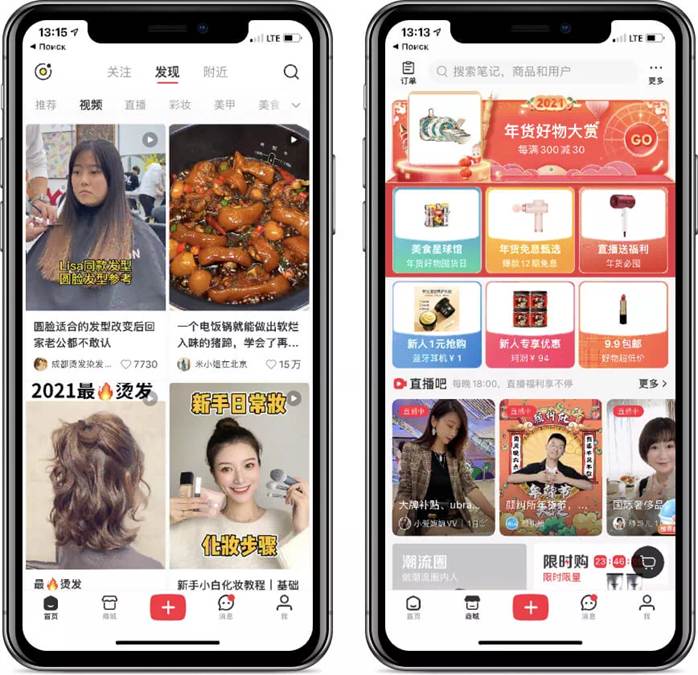
Xiaohongshu platform: where users post product reviews, give shopping tips,
and talk about themselves.
From Scarcity to Surplus
The story of the Li family spans two worlds. In one, scarcity defined every choice; in the other, abundance shapes every habit.
- From ration books to smartphones: Where Mrs. Li once queued for hours, Lily orders luxuries in seconds. Algorithms now orchestrate consumption, creating urgency not through shortage but through endless flash deals.
- From need to want: Consumption today is rarely about necessity. Lily doesn’t buy milk tea because she’s thirsty—she buys because she can, because the discount makes it irresistible. The act of buying itself has become the point.
- From preservation to disposability: For the grandmother, every object carried meaning. For Lily, objects are replaceable, disposable, and cheap. Waste is normalized.
- From survival to identity: Buying is no longer about subsistence but about self-expression and social connection. Sharing branded drinks with colleagues, posting pictures online—consumption now builds social capital.
Yet across this divide, one thread connects the generations: memory. The grandmother embodies it; the granddaughter seeks to erase it.
Closing Reflection
In the end, Lily’s twelve untouched milk teas are more than a whimsical overindulgence. They are the embodiment of a generational shift: a society that once stood in endless lines for a single ration now buys in bulk, not out of need but out of possibility. For her grandmother, each object once carried weight, purpose, and memory; for Lily, objects are fleeting, disposable, instantly replaceable. Yet beneath the excess lies something more symbolic. Buying isn’t just about utility—it’s about banishing the memory of want, proving with every purchase that deprivation is no longer their inheritance.
 Marco Lobo
Leave a comment